
Kids’ teeth need a pediatric dentist

What it is and what it is for
Pediatric dentistry, also known as pedodontics (from Greek παῖς, παιδός: child and ὀδούς: tooth), focuses on the care of children’s teeth – including prevention, diagnosis, and treatment – for patients from 0 to 16 years of age. This area of oral health is managed by dentists specialized in treating children, with the aim of preventing cavities and pediatric orthodontic problems.

When to schedule the first visit
From the first year of life, it is advisable to begin regular dental check-ups.

How the pediatric dentist works
Communication, efficiency, and a calm, reassuring environment are essential in the care of young patients.

Why it is essential
Early prevention of dental caries and monitoring the development of the mandible and maxilla are crucial.
Oral health begins in early childhood
What is pediatric dentistry: a definition
Pediatric dentistry (Pedodontics) is the branch of dentistry dedicated to the oral health of children and adolescents. The aim of pediatric dentistry — and of our pediatric dentist in Naples — is to treat dental conditions and to educate both children and parents on proper oral hygiene and healthy dietary habits to prevent the onset of dental caries.
Caring for primary (baby) teeth is essential, even though they will eventually be replaced by permanent teeth. Early loss or decay caused by caries — in addition to causing discomfort and pain in children — can lead to serious problems, such as misalignment of the permanent teeth, which may later require treatment by a pediatric orthodontist.

Natascia Raciti
In our dental practice, childhood dental care is managed by Dr. Natascia Raciti, a dentist in Naples specialized in pediatric dentistry and in the management of both primary (deciduous) and permanent dentition.
What does a pediatric dentist do?
In addition to being skilled in the techniques required to treat children’s dental conditions, a pediatric dentist must also develop specific competencies. Their approach – both psychological and clinical – is designed to help overcome the young patient’s fears and create a positive, reassuring dental experience.
Depending on the case, pediatric dentistry encompasses all branches of dentistry, with the exception of osseointegrated implantology, as the placement of dental implants is absolutely contraindicated before the completion of skeletal growth. Therefore, implantology is not part of pediatric dental care. Pediatric dentists treat even very young children in order to establish a relationship based on trust. Their role includes preventing dental caries, motivating and teaching proper toothbrushing techniques, providing dietary advice, and applying preventive measures such as fluoride varnishes and dental sealants.
The pediatric dentist is also responsible for managing many of the conditions affecting the oral cavity, including dental caries, periodontal diseases, mineralization disorders, abnormalities in tooth development and eruption, and traumatic injuries — even in special circumstances, such as treating children with autism or other disabilities. Having children examined by a pediatric dentist is essential to detect potential malocclusions early. Prompt intervention by a pediatric orthodontist is crucial: up to the age of 13, orthodontic appliances can influence skeletal growth and, for example, help prevent the development of a skeletal Class III malocclusion.
A child who visits the dentist will grow into an adult with healthy teeth.
I’ve been told that treating baby teeth is unnecessary…
Deciduous teeth (baby, milk or primary teeth) should always be treated, as they perform essential functions. They preserve the space for the permanent teeth, guide their eruption, and are fundamental for proper chewing and speech. They also support the harmonious development of the mandible and maxilla and, finally, play an important aesthetic role by contributing to a positive self-image. Treatments performed on primary teeth may include restorative (conservative) procedures or endodontic therapies, depending on whether the carious lesion is limited to the dentin or has involved the pulp chamber.
Risks of not treating primary teeth
- Abscesses, swelling, and severe pain
- Difficulty eating solid foods
- Altered speech and communication problems
- Premature tooth loss
- Crooked or overlapping permanent teeth
- Risk of complications affecting overall health
- Lack of proper oral hygiene education
- More complex and costly orthodontic treatments
Benefits for children who visit the dentist
- Prevents abscesses, infections, and severe pain
- Maintains proper chewing and digestion
- Primary teeth are essential for correct speech development
- Encourages proper eruption of permanent teeth
- Reduces the risk of orthodontic problems
- Allows the child to smile with confidence
- Teaches good oral hygiene habits from an early age
- Helps prevent more complex and costly treatments
Useful questions and answer
Ideally, a child should see a pediatric dentist as early as 1 year of age. An early first visit helps establish a relationship based on trust and comfort, making future appointments easier and more positive.
It is advisable that the first dental visit does not coincide with the need for treatment, such as a toothache or trauma, in order to avoid associating the dentist with a negative experience.
Caries prevention in children is a key challenge. The first step begins as soon as the first tooth erupts, with proper oral hygiene performed by the parent using appropriate tools (such as a soft infant toothbrush or gauze). As the child grows, it is important to encourage brushing after every meal.
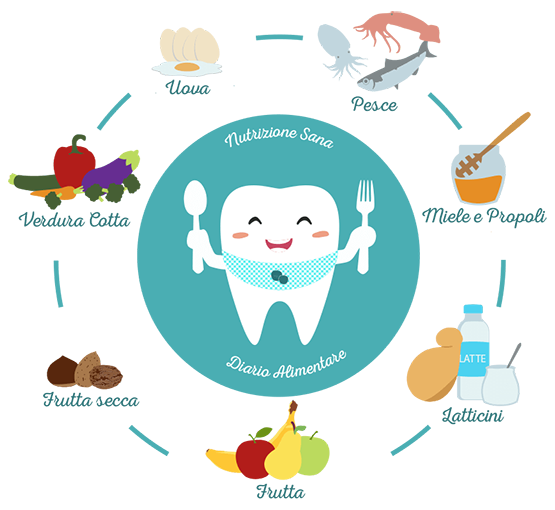
A balanced diet also plays a crucial role: the consumption of highly sugary foods (such as candies, jam, and fruit juices) should be limited, and the use of sugars like honey or fruit juices — especially when given through a pacifier or bottle — should be strictly avoided.
After the first visit, children should be monitored by the pediatric dentist every 6 to 12 months to assess oral hygiene, diet, and the harmonious development of the oral cavity. In patients at high risk of caries, the chewing surfaces of molars can be sealed with composite resins, making them smoother and easier to clean. This reduces plaque accumulation in pits and fissures, where most childhood caries originate.
If decay involves the dental pulp, endodontic treatment (such as pulpotomy, pulpectomy, or apexogenesis) may be required.
Injuries related to play or sports are among the most common reasons children visit the dentist. The most frequent conditions include crown fractures, tooth avulsion (complete displacement), or intrusion.
In the case of a crown fracture, it is essential to retrieve the broken fragment, store it properly (in saline solution, milk, or saliva), and immediately consult a dental specialist. If possible, the dentist will reattach the fragment, restoring the tooth’s integrity.
Further insights into the role of the pediatric dentist
Yes, professional dental cleaning for children is essential to prevent cavities, gum problems, and to protect the health of permanent teeth. Our sessions are painless and designed to be a positive experience for the child.
A dental abscess is an acute infection that requires immediate treatment. If a child develops a dental abscess, prompt intervention is necessary to relieve pain, prevent complications, and protect the health of the permanent tooth.
A child’s first dental visit is an important milestone. Talk about the dentist as a friend, avoid words such as “pain” or “fear,” and schedule the appointment at a calm time, when the child is not tired or stressed. Dental anxiety in children is natural, but with the right approach, it can be successfully managed.
Tooth pain in children can be difficult to handle. A consultation with a pediatric dentist is essential to identify the cause and resolve the issue promptly, ensuring your child’s comfort and well-being.
Use positive and reassuring language, listen carefully to the child’s concerns, and acknowledge their emotions without minimizing them. Once at the dental office, it is important to let the pediatric dentist take the lead: they are trained to address doubts and fears and help children feel safe and confident. Pediatric dentists understand that children may experience dental anxiety and can become distressed while sitting in the dental chair.
The appropriate age varies depending on the case, but orthodontic concerns can arise between 4 and 11 years of age. An early specialist evaluation can determine the most suitable orthodontic treatment to correct misaligned teeth.
A child with autism or other disabilities is not untreatable from a dental perspective. Our practice includes dentists specialized in the care of children with disabilities, equipped to manage a wide range of dental conditions with appropriate techniques and attention.
Yes, primary teeth affected by dental caries must be treated. Tooth decay can affect deciduous teeth, and it is incorrect to assume that, since they will eventually fall out, dental treatment is unnecessary.
The average lifespan of an esthetic dental veneer is approximately 10 years, similar to any fixed prosthetic restoration. However, with proper maintenance and regular professional care, veneers can last more than 20 years.
Cleaning young children’s teeth means protecting their oral health from an early age. There are specific techniques to follow when learning how to brush the teeth of infants and toddlers, even from just a few months old.
Teething is the stage during which a baby’s teeth erupt. It is a fundamental developmental phase that allows children to use their first teeth — also known as primary, temporary, or deciduous teeth — for chewing.
Yes, prolonged pacifier use beyond the age of 3 can lead to orthodontic problems, such as protrusion of the incisors. Gradually discontinuing this habit is important to preserve proper oral development.
The loss of the first baby tooth is a special milestone for both children and parents. Primary (deciduous) teeth are generally replaced between the ages of 6 and 12, although timing may vary from child to child.
When should a child see the dentist for the first time? Ideally, the first dental visit should take place around the first year of age. This initial appointment is important to build a positive and trusting relationship between the child and the pediatric dentist.
Take care of your children’s teeth
Contact us today.
Our team is available to assist international patients, provide clear information, and support you before and during your visit to Naples.
- Phone: +39 081 245 1805
- Email: info@studiodentisticocozzolino.it
- Address: Via Raffaele De Cesare 31, 80132 – Naples, Italy
We recommend contacting us in advance to better organize the visit for your child and ensure the best possible care. Ask for info or schedule a visit.
